
The History of Chinese New Year
Why Is Chinese New Year important? Chinese New Year has enjoyed a history of about 3,500 years. The origin of the festival can be traced back to the worshiping activities in China’s ancient agrarian society. There's a lot of talk about absinthe's history and the myths therein. Chinese New Year is also known as the Spring Festival. China, however, continues to celebrate Chinese New Year with the traditional greeting, “Kung hei fat choi.” Here are some details of chinese new year history.
The History and Origin of Chinese New Year
Chinese New Year, also known as the Lunar New Year is the most important among the traditional Chinese holidays. It is celebrated on the first day of the first month of the Chinese calendar, i.e. the day of the second new moon after the day on which the winter solstice occurs.Popularly known as theSpring Festival, the festival isunofficially observedthe on 23rd day or 24th day of the 12th month of the lunar calendar and ends with the Lantern Festival, which is on the fifteenth day of the First month of the New Year (i.e. a full moon).
The Origin of New Year
Many historical and mythical legends are being associated since a long time, with the celebration of the New Year festival however few amongst them which actually is quite correlated with the celebration are as follows.
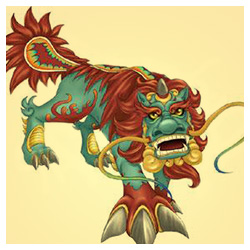 As far as the century-old legend is concerned, the celebration of the festival is dedicated to aterrible mythical monster named Nian, who preyed on the villagers and used to terrorise them. Thus according to the oft-heard legend, an old wise man advised his fellow villagers to make loud noises with drums and firecrackers so that the loud noise could petrify the demon Nian thus warding him away.Moreover he further advised the villagers to hang red paper cut-outs and scroll them on their doors for Nianwas scared of the color red. The villagers did as was being instructed, thus Nian was fully conquered. Fromthen onwardsthe anniversary of the date is recognizedas the “passing of the Nian, which also became synonymous with celebrating the New Year.
Moreover if anyone goes as per the historical background one will be thrilled at the striking incident which are being associated with. The Chinese were basically agrarian people. Their main occupation comprised of agricultural works. So forthe whole purpose, calendar was required to be maintained for keeping track of time so as to facilitate agriculture. It was important to know when to till the soil and when the time is ripe to sow the seeds. Thus it can be rightly assumed that the first calendar in China was a sort of put together for the benefit of agriculture production. However the date of Chinese New Year changes every year as it is entirely based on the lunar calendar. For while the western Gregorian calendar is based on the earth’s orbit around the sun, China and most Asian countries do use the lunar calendar which is based on the moon’s orbit around the earth. Thus Chinese New Year always falls on the second new moon after the winter solstice.
Since the Chinese civilization came much earlier than the Buddhism and Daoism development, hence the customs related to the celebration are far more different from the other religions, for like any agrarian society, Chinese New Year is rooted in much a celebration of spring just like Easter or Passover. Thus the New Year was likely the start of preparations for a new growing season.
Chinese New Year vs. Spring Festival
Chinese New Year and Spring Festival are quite synonymous for the Chinese civilisation, for they are a week long civilization, for there is an inter-linkage between the both terms, commonly used.
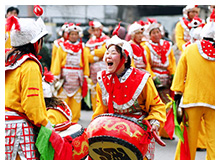 However the origin of the inter-linkage between these terms is quite fascinating indeed. In 1912, the newly-formed Chinese Republic, which was duly governed by the Nationalist party, renamed the traditional holiday of the Chinese New Year to Spring Festival,with the motive that the Chinese people could accept the western New Year instead. However during this span of time, many Chinese intellectuals felt that modernization meant following the Western blindly.But when the Communists came to power in 1949, the celebration of New Year was viewed as one of the feudalistic event and thus seeped in religion which was not proper for an atheist China. Thus under the Chinese Communist Party, many years passed by without actually celebrating New Year.But by the year 1980s, China began liberalizing its economy, thus Spring Festival celebrations slowly became big business. From then onwards the celebration took an enormous shape and thus celebrating New Year became a gala affair for the Chinese.
A few years ago, however, the government of China announced that it would the holidays would be shortened. Thus many National holidays are being shortened by the Chinese government; however the week-long holiday of the Spring Festival, is still observed. Perhaps even today, several epochs after the first New Year, the fear of the Nian is well alive.
 Mother's Day
 Buddha Purnima
 Personal Finance Guide
 Multifaceted Blog
 Good Morning
 Dating