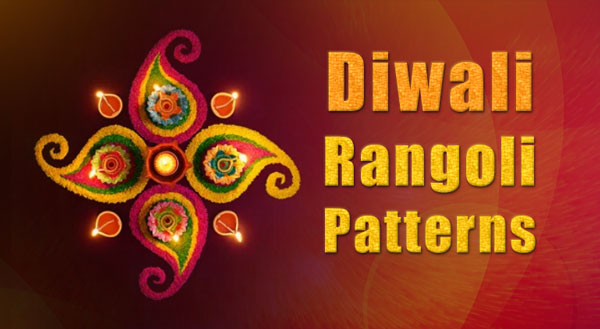
Rangoli is an integral part in the dazzling celebrations of Diwali. The age-old tradition is a fascinating art which requires a high amount of meticulousness, artistic sense and creativity. Read on to know more about it. Click here to refer this page to your friends and relations and include them in the joyous festivity.
Diwali Rangoli, Rangoli designs, and how to make a rangoli
Diwali rangoli designs and patterns are colorful and intricate decorative art forms created on the ground, typically in front of homes and entrances during the festival of Diwali, which is also known as the Festival of Lights. Rangoli is a popular tradition in India and with Hindus and is meant to welcome guests and bring good luck. These designs vary in complexity, from simple and geometric to highly detailed and artistic. Here are some common Diwali rangoli designs and patterns:
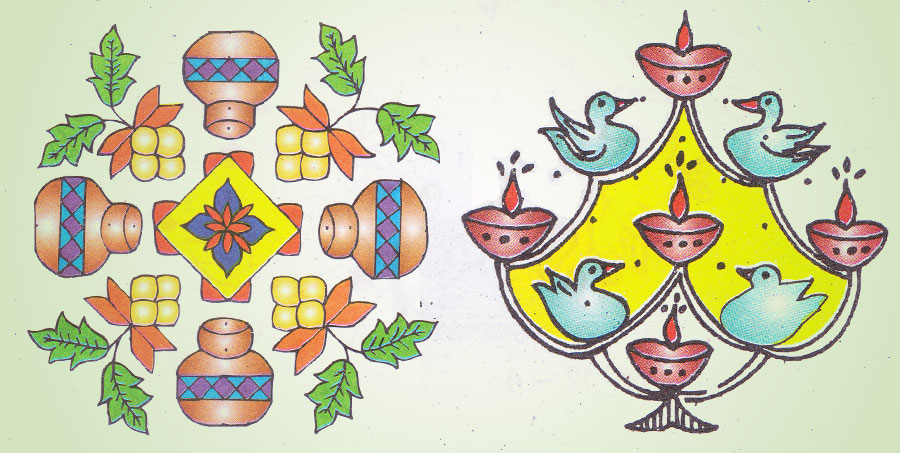
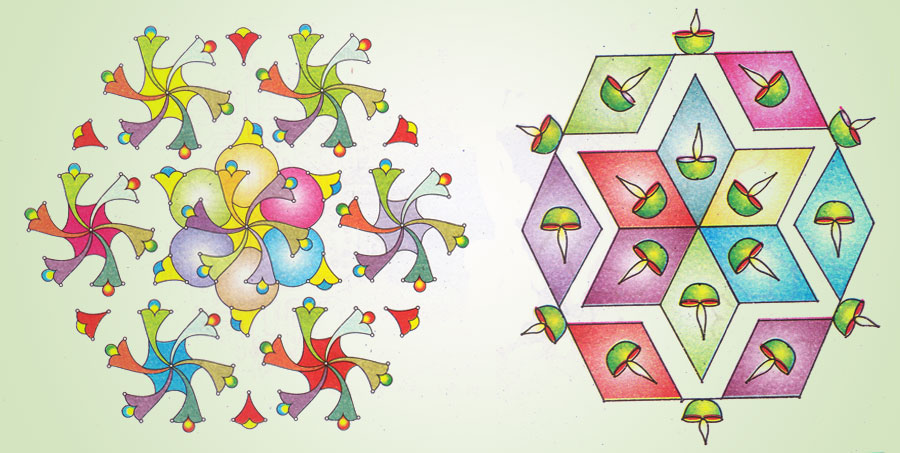
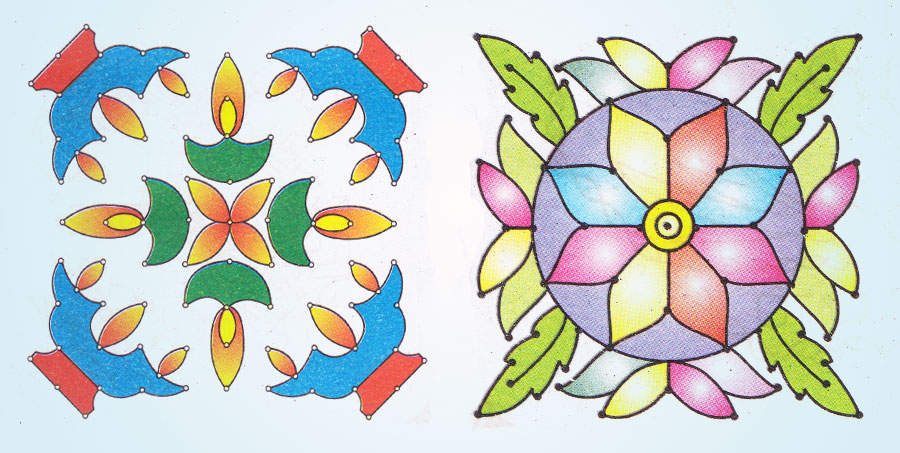
Traditional Diya Rangoli
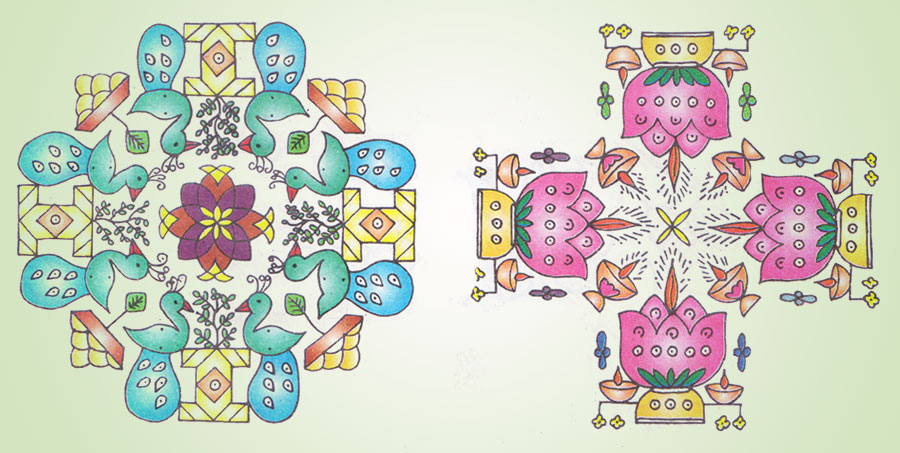
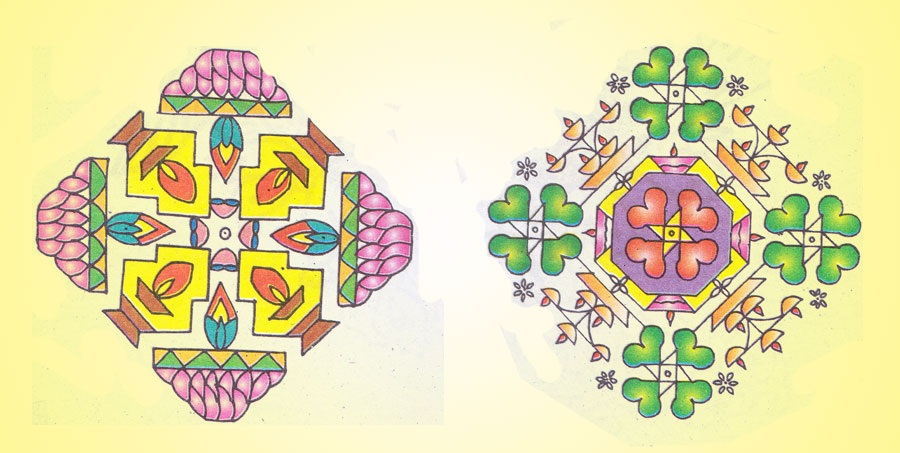
This design features oil lamps or diyas arranged in a circular or square pattern. It is a symbol of light and spirituality, two essential elements of Diwali.
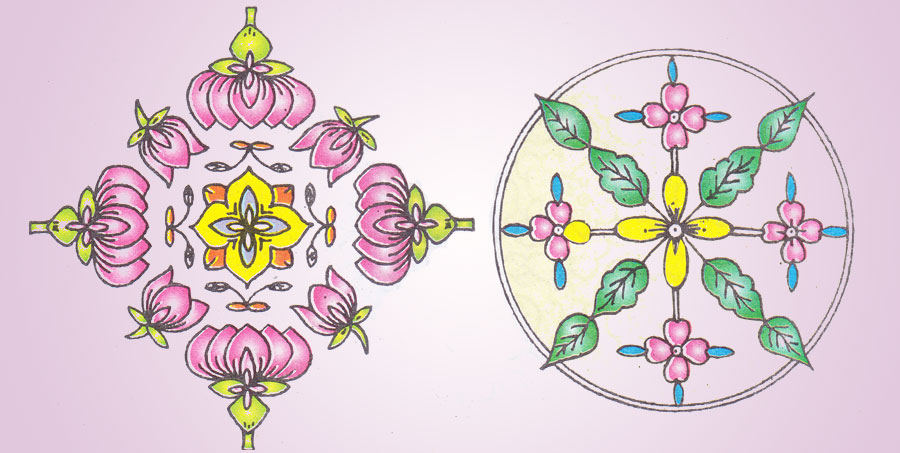
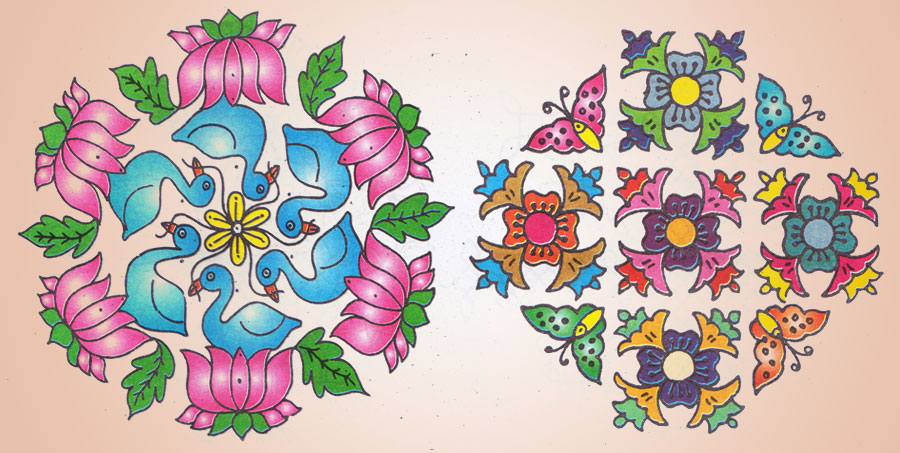
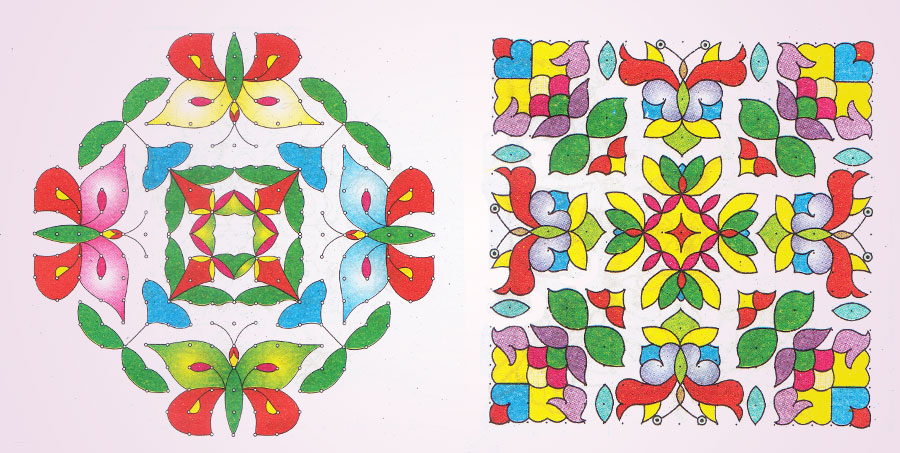
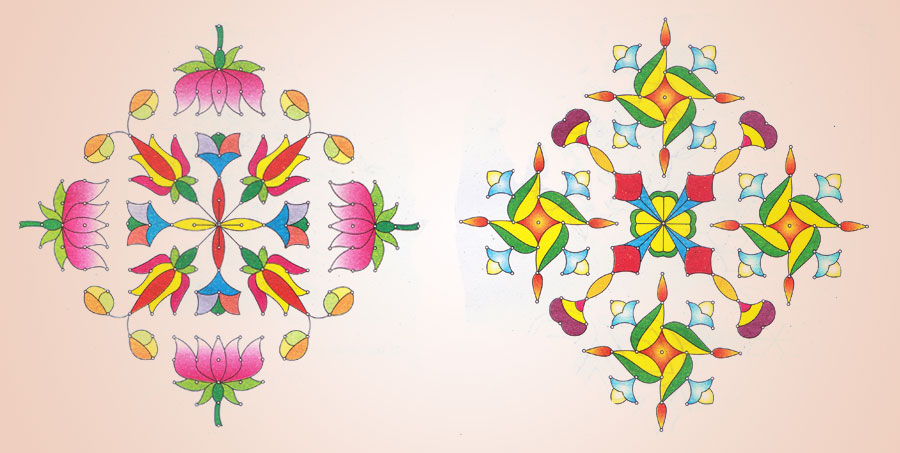
Floral Rangoli
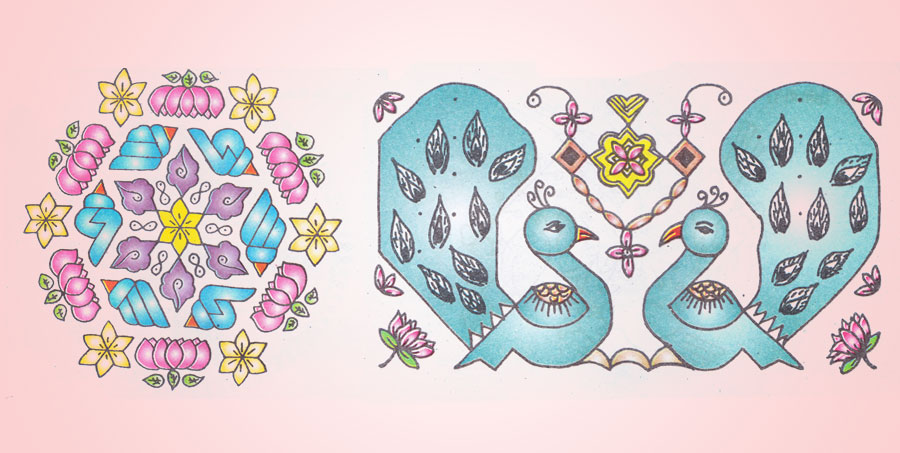
These designs incorporate various flower patterns, such as lotus, marigold, and roses. They are not only visually appealing but also emit a pleasant fragrance.
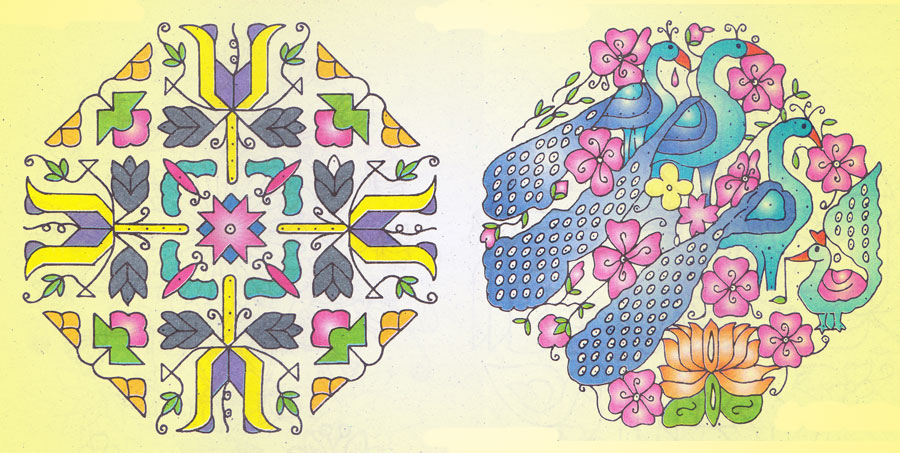
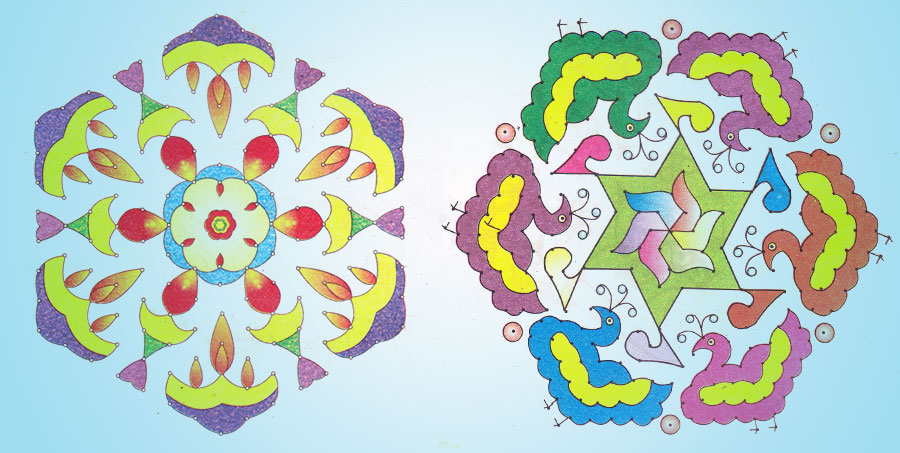
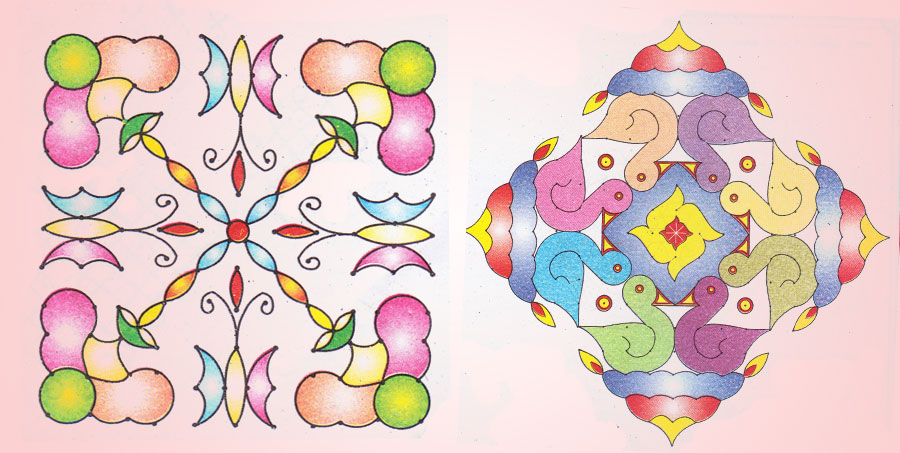
Peacock Rangoli
The peacock is a symbol of grace and beauty in Indian culture. Peacock-themed rangoli designs often include intricate peacock feather patterns and vibrant colors.
Geometric Patterns
These rangoli designs consist of geometric shapes like squares, circles, triangles, and hexagons. They are relatively simple to create and can be filled with various colors.
Kundan or Stone Rangoli
These rangoli designs involve using colorful kundan stones or gems to create intricate patterns. They add a three-dimensional and sparkling effect to the rangoli.
Freehand Artistic Rangoli
These rangoli designs are created by freehand drawing using colored rice, sand, or flower petals. They often feature religious symbols, deities, or other intricate designs.
Swastika Rangoli
The Swastika is an auspicious symbol in Hinduism, and Swastika rangolis are made to bring good fortune. It is a simple yet powerful design.
Alpana Rangoli
Alpana is a traditional Bengali rangoli art characterized by its delicate, fine lines and motifs. It often uses rice paste or rice flour and is a common design during Diwali in West Bengal.
Rangoli with Diwali Messages
Some people incorporate Happy Diwali messages or wishes within their rangoli designs, adding a personal touch to the festive decoration.
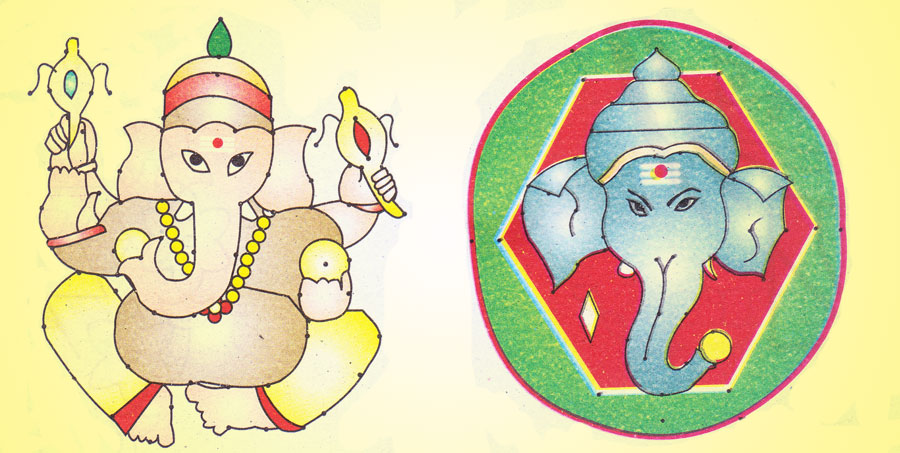
Ganesh Rangoli
Rangoli designs featuring Lord Ganesha, the elephant-headed god, are believed to bring blessings and prosperity to the household.
Lakshmi Footprint Rangoli
This design features the footprints of Goddess Lakshmi, the goddess of wealth, and is meant to invite prosperity into the home.
Modern and Contemporary Rangoli
Many people also create rangoli designs with a modern twist, using unique shapes, patterns, and a wide range of colors.
Rangoli designs can vary from region to region in India, and they offer a creative outlet for individuals to showcase their artistic skills during the Diwali celebration. The choice of design often depends on personal preferences, artistic abilities, and the time and resources available for creating the rangoli.
Exclusive Rangoli Collections from TheHolidaySpot.com
Rangoli
'Rangoli' is a Sanskrit
word which means a creative expression of art through the use of color.The
word
rangoli
may also have come from "rang" (color) + "aavalli" (row), which means row
of colors, or from rang+avalli, which means creepers of colors. Basically,
Rangoli is the art of drawing images and motifs on the floor and walls of
one's home using different color powders. Designed with a beautiful
combination of various colors, the Rangoli images create an enchanting
piece of art. Basically a floor painting, a rangoli image stands for a
sign of welcome. The main purpose of making rangolis in diwali is to
welcome Goddess Laxmi, the Goddess of wealth, to individual homes apart
from warding off the evil eye. The art of rangoli is known by different
names in different regions such as "Rangoli" in Maharashtra, Alpana (in
Bengal), and Kolam (in South India). Although Rangoli has its origins in
Maharashtra, today it is practiced everywhere. One of the most popular
arts among Indian women, rangoli is an age old custom of India, and
practiced all over the country.
The Rangoli designs are passed down through generations, with some of them
being hundreds of years old. Though the designs vary in different sections
of India, the basic approach is common. The designs are geometric and
proportioned. It has been a tradition in culturally rich India to draw
Rangoli on the festivals and other auspicious occasions as it is
considered a holy ritual. There is a unique relationship between the
festival of diwali and rangoli. Diwali is a major festival of India and
drawing rangoli on diwali is a part of diwali celebrations.
The patterns are made with finger using rice powder, crushed lime stone,
or colored chalk. They may be topped with grains, pulses, beads, or
flowers. Since the entire objective of making rangoli in diwali is to
welcome Goddess Laxmi, small footprints coming into the home, representing
the footprints of the Goddess,
are also made. Rangolis can be of any size, from the size of a doormat, to
the covering an entire room. Though making of a Rangoli is highly
dependent on the preferences and skills of the maker, lines are always
drawn on one finger movement (rangolis are always drawn with fingers) and
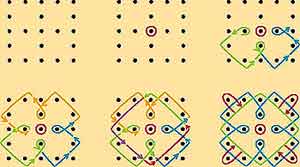
frequently, the mapping of the rangoli is done with the help of dots,
which are joined to form a pattern, and then the pattern is filled with
colors. One important point is that the entire pattern must be an unbroken
line, with no gaps to be left anywhere, for evil spirits are believed to
enter through such gaps, if they find one. In an expert hand, the images
created are elaborate and look as if they are painted. In India, this art
is temporary. Each rangoli design generally stays for only a day or two as
it is often redone as a part of the daily routine. Certain designs are
created on special occasions such as weddings and religious festivals like
Diwali.
Rangoli Decoration Themes
Rangoli designs are generally based on themes that have been in use
through ages. The common rangoli themes are the celestial symbols such as
the rising sun, moon, stars, zodiac signs, holy symbols like Om,
mangal
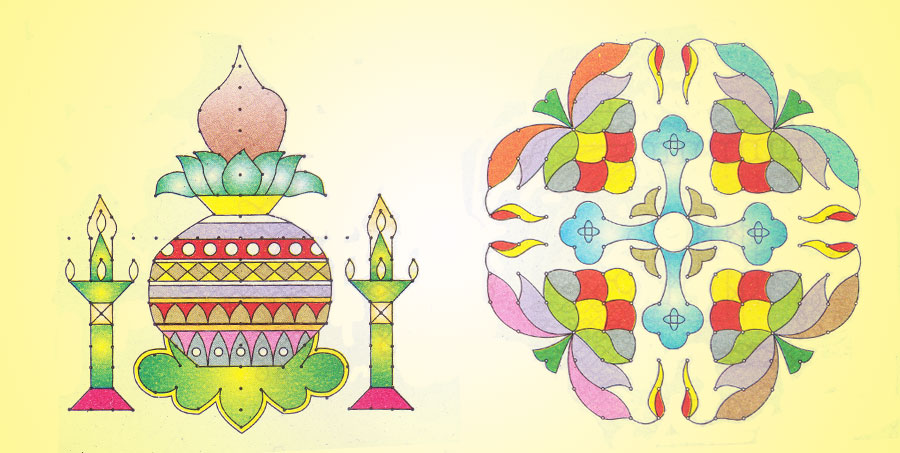
kalash, swastika, chakra, a lighted Deepak, trident, "shree", lotus etc.
Goddess Lakshmi in the lotus symbolizes the figure of renewed life. Other
popular themes are natural images like flowers, creepers, trees, fish,
birds, elephants, dancing figures, human figures and geometrical figures
such as circles, semi-circles, triangles, squares and rectangles. Drawing
Diwali rangoli at the entrance door of individual homes is the common
sight during Diwali decoration. For this, the footsteps of Goddess Lakshmi
entering into the home are designed at the main entrance of the home or
near the place of worship, which indicates the entrance of prosperity in
the home. This is the special Diwali rangoli for the entrance. It is
considered auspicious as it signifies showering of good luck and
prosperity on the house and in the family.
However, all said and done, the theme and design of a Diwali Rangoli is
dependent upon the creativity and
imagination of an individual. Rangoli can be improvised into diverse
visual art forms. There is really no limit
to what you can do with a Rangoli. Because of this aspect of Rangoli, some
Hindu communities in India actually organize Rangoli competitions during
Diwali celebrations and prizes are given for the best designs. It is a
delight to see the colorful designs unfold in the lights and fireworks of
Diwali.
Rangoli Ingredients
A
variety of ingredients are used to create a Rangoli. In old days, the x
colors were traditionally derived from natural dyes - from barks of trees,
leaves, indigo, etc. Today however, synthetic dyes are used in a range of
bright hue. Rangoli being mainly a floor art, powdered colors are used on
cleaned floors to form decorations. The powder primarily consists of
finely grounded rice flour. Finely ground white stone powder is used these
days, as this is easier to apply and makes the rangolis brighter and well
finished. One can also mix rice flour with white stone powder for a better
preparation. The powder is usually taken in a pinch and applied with the
thumb and the forefinger. Rangolis can be vivid, three-dimensional art
complete with shadings when cereals, pulses either in their natural
coloring or tinted with natural dyes are applied or they can be the
traditional plain, yet as beautiful as, two-dimensional designs when
colored powder such as rice, brick, chilly, turmeric, etc is used. In
south Indian states like Kerala, flowers like marigolds and chrysanthemums
and leaves are used to create Rangoli.
As a Rangoli is created through sprinkling powder by hand it is a very
laborious and difficult process, and it's
difficult to render fine details - meaning the image must be quite large.
But all pains are taken to create a perfect Rangoli. Why? Because this art
reflects the Indian culture and upholds the age old values of hospitality,
perfection in art and also, a deep-rooted reverence for the divine beings
and a fear for the powers beyond the realm of human understanding.
Rangoli brings a sense of completion in the joyous celebrations of Diwali.



 difficult to render fine details - meaning the image must be quite large.
But all pains are taken to create a perfect Rangoli. Why? Because this art
reflects the Indian culture and upholds the age old values of hospitality,
perfection in art and also, a deep-rooted reverence for the divine beings
and a fear for the powers beyond the realm of human understanding.
difficult to render fine details - meaning the image must be quite large.
But all pains are taken to create a perfect Rangoli. Why? Because this art
reflects the Indian culture and upholds the age old values of hospitality,
perfection in art and also, a deep-rooted reverence for the divine beings
and a fear for the powers beyond the realm of human understanding. Mother's Day
 Buddha Purnima
 Personal Finance Guide
 Multifaceted Blog
 Good Morning
 Dating