History of Halloween
History of Halloween, like any other festival's history is inspired through traditions that have transpired through ages from one generation to another. We follow them mostly as did our dads and grandpas. And as this process goes on, much of their originality get distorted with newer additions and alterations. It happens so gradually, spanning over so many ages, that we hardly come to know about these distortions. At one point of time it leaves us puzzled, with its multicolored faces. Digging into its history helps sieve out the facts from the fantasies which caught us unaware. Yet, doubts still lurk deep in our soul, especially when the reality differs from what has taken a deep seated root into our beliefs. The history of Halloween Day, as culled from the net, is being depicted here in this light. This is to help out those who are interested in washing off the superficial hues to reach the core and know things as they truly are. 'Trick or treat' may be an innocent fun to relish on the Halloween Day. But just think about a bunch of frightening fantasies and the scary stories featuring ghosts, witches, monsters, evils, elves and animal sacrifices associated with it. They are no more innocent. Are these stories a myth or there is a blend of some reality? Come and plunge into the halloween history to unfurl yourself the age-old veil of mysticism draped around it.
 Behind
the name, Halloween, or the Hallow E'en as they call it in Ireland, means All Hallows Eve, or the night before the 'All Hallows', also
called 'All Hallowmas', or 'All Saints', or 'All Souls' Day,
observed on November 1. In old English the word 'Hallow' meant
'sanctify'. Roman Catholics, Episcopalians and Lutherians used to
observe All Hallows Day to honor all Saints in heaven, known or
unknown. They used to consider it with all solemnity as one of the
most significant observances of the Church year. And Catholics, all
and sundry, was obliged to attend Mass. The Romans observed the
holiday of Feralia, intended to give rest and peace to the departed.
Participants made sacrifices in honor of the dead, offered up
prayers for them, and made oblations to them. The festival was
celebrated on February 21, the end of the Roman year. In the 7th
century, Pope Boniface IV introduced All Saints' Day to replace the
pagan festival of the dead. It was observed on May 13. Later,
Gregory III changed the date to November 1. The Greek Orthodox
Church observes it on the first Sunday after Pentecost. Despite this
connection with the Roman Church, the American version of Halloween
Day celebration owes its origin to the ancient (pre-Christian)
Druidic fire festival called "Samhain", celebrated by the Celts in
Scotland, Wales and Ireland. Samhain is pronounced "sow-in", with
"sow" rhyming with cow. In Ireland the festival was known as
Samhein, or La Samon, the Feast of the Sun. In Scotland, the
celebration was known as Hallowe'en. In Welsh it's Nos Galen-gaeof
(that is, the Night of the Winter Calends. According to the Irish
English dictionary published by the Irish Texts Society: "Samhain,
All Hallowtide, the feast of the dead in Pagan and Christian times,
signalizing the close of harvest and the initiation of the winter
season, lasting till May, during which troops (esp. the Fiann) were
quartered. Faeries were imagined as particularly active at this
season. From it the half year is reckoned. also called Feile
Moingfinne (Snow Goddess).(1) The Scottish Gaelis Dictionary defines
it as "Hallowtide. The Feast of All Soula. Sam + Fuin = end of
summer."(2) Contrary to the information published by many
organizations, there is no archaeological or literary evidence to
indicate that Samhain was a deity. The Celtic Gods of the dead were
Gwynn ap Nudd for the British, and Arawn for the Welsh. The Irish
did not have a "lord of death" as such. Thus most of the customs
connected with the Day are remnants of the ancient religious beliefs
and rituals, first of the Druids and then transcended amongst the
Roman Christians who conquered them.
Behind
the name, Halloween, or the Hallow E'en as they call it in Ireland, means All Hallows Eve, or the night before the 'All Hallows', also
called 'All Hallowmas', or 'All Saints', or 'All Souls' Day,
observed on November 1. In old English the word 'Hallow' meant
'sanctify'. Roman Catholics, Episcopalians and Lutherians used to
observe All Hallows Day to honor all Saints in heaven, known or
unknown. They used to consider it with all solemnity as one of the
most significant observances of the Church year. And Catholics, all
and sundry, was obliged to attend Mass. The Romans observed the
holiday of Feralia, intended to give rest and peace to the departed.
Participants made sacrifices in honor of the dead, offered up
prayers for them, and made oblations to them. The festival was
celebrated on February 21, the end of the Roman year. In the 7th
century, Pope Boniface IV introduced All Saints' Day to replace the
pagan festival of the dead. It was observed on May 13. Later,
Gregory III changed the date to November 1. The Greek Orthodox
Church observes it on the first Sunday after Pentecost. Despite this
connection with the Roman Church, the American version of Halloween
Day celebration owes its origin to the ancient (pre-Christian)
Druidic fire festival called "Samhain", celebrated by the Celts in
Scotland, Wales and Ireland. Samhain is pronounced "sow-in", with
"sow" rhyming with cow. In Ireland the festival was known as
Samhein, or La Samon, the Feast of the Sun. In Scotland, the
celebration was known as Hallowe'en. In Welsh it's Nos Galen-gaeof
(that is, the Night of the Winter Calends. According to the Irish
English dictionary published by the Irish Texts Society: "Samhain,
All Hallowtide, the feast of the dead in Pagan and Christian times,
signalizing the close of harvest and the initiation of the winter
season, lasting till May, during which troops (esp. the Fiann) were
quartered. Faeries were imagined as particularly active at this
season. From it the half year is reckoned. also called Feile
Moingfinne (Snow Goddess).(1) The Scottish Gaelis Dictionary defines
it as "Hallowtide. The Feast of All Soula. Sam + Fuin = end of
summer."(2) Contrary to the information published by many
organizations, there is no archaeological or literary evidence to
indicate that Samhain was a deity. The Celtic Gods of the dead were
Gwynn ap Nudd for the British, and Arawn for the Welsh. The Irish
did not have a "lord of death" as such. Thus most of the customs
connected with the Day are remnants of the ancient religious beliefs
and rituals, first of the Druids and then transcended amongst the
Roman Christians who conquered them.
History of Jack-o-Lantern:
Carve a Jack-o-Lantern yourself to make a Halloween pumpkin
This is based on an
old Irish legend about the drunk, Jack. One day he was out in the woods and tricked
Satan into a tree to throw down some fruit. Once Satan had helped him he carved
a cross into the tree and trapped him there. He then struck a deal that Satan
would leave his soul alone when he died. This backfired when he died since heaven
would not take him either. When he kept bothering the Devil to let him in the
Devil gave him a burning ember instead. He carried the ember in a hollowed out
turnip (sometimes described as rotton) to light his way as he wandered through
eternal darkness on the earth. Eventually this was replaced with the pumpkin in
America and became the modern Jack-o-Lantern
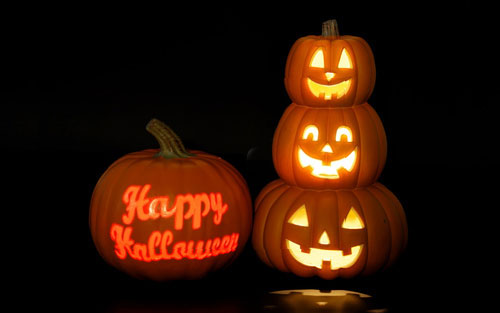
Jack-o-lantern - the genesis
According to Rees & Rees, the folks who were abroad in the night imitating the fairies would some- times carry turnips carved to represent faces. This is the origin of our modern Jack-o-lantern. It became popular as house decorations in the United States after immigrant Irish discovered how much easier pumpkins were to carve than turnips, unleashing what has turned into quite an art form in the last decade or so. This later assumed a spooky touch, especially when the glowing faces appear from the darkness.
This halloween, carve a Jack-O-Lantern Yourself , and say Boo !
Carving Tips
Select a pumpkin that is ripe, has no bruises, cuts or nicks. Do not carry a pumpkin by its stem; it may break, and do not bruise it as it will not last as long. For easy cleanup, place your pumpkin on several layers of newspaper before carving. Kids: have a parent or other adult cut a circle around the stem of the pumpkin for you. They should use a sharp knife with long, sturdy blade for best and safest results. Or, you can do it yourself with a safer, plastic "pumpkin carving" knife available at many supermarkets during the pumpkin season. Parents: knives are very sharp, so make sure that the proper supervision is maintained when the children carve their pumpkins.
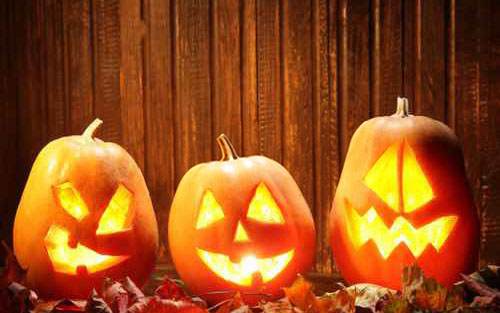
Make sure the hole is large enough
to reach in and pull out the seeds and stringy membrane. The bottom of the pumpkin
could also be cut off instead, this will allow the pumpkin to sit up straight
and make removing the seeds easier! When cleaning out the pumpkin, use and old
soup ladle to get out the seeds. Try carving a giant pumpkin, it is easier to
carve than a regular pumpkin.
Examine your pumpkin to determine the best
place to carve his or her face. Draw an outline of a face on a plain sheet of
white paper (use simple bold features) (You can save any of the images given below,
and then print it out for ready help), Tape your paper to the pumpkin where you
want the face to be. Score the design onto the pumpkin by punching through the
paper into the pumpkin with a large nail or pin.
Carefully cut out the
design following the holes that were "punched" with your plastic knife. When you
are finished cutting, simply push out the pieces to view the final results. Fix
some lights inside. Now you're all set to light up your home on Halloween night!
Have Fun!
History of Halloween Witches
The Witches Caldron
"Eye of newt, and toe of frog,
Wool of bat, and tongue of dog"
"Adder's fork, and blind-worm's sting,
Lizard's leg, and owlet's wing"
"For a charm of powerful trouble,
Like a hell-broth boil and babble"
"Double, double, toil and trouble,
Fire burn, and caldron bubble"
~ William Shakespeare
Witches have had a long history with Halloween. Legends tell of witches gathering twice a year when the seasons changed, on April 30 - the eve of May Day and the other was on the eve of October 31 - All Hallow's Eve.
The witches would gather on these nights, arriving on broomsticks, to celebrate a party hosted by the devil. Superstitions told of witches casting spells on unsuspecting people, transform themselves into different forms and causing other magical mischief.
It was said that to meet a witch you had to put your clothes on wrong side out and you had to walk backwards on Halloween night. Then at midnight you would see a witch.
When the early settlers came to America, they brought along their belief in witches. In American the legends of witches spread and mixed with the beliefs of others, the Native Americans - who also believed in witches, and then later with the black magic beliefs of the African slaves.
The black cat has long been associated with witches. Many superstitions have evolved about cats. It was believed that witches could change into cats. Some people also believed that cats were the spirits of the dead.
One of the best known superstitions is that of the black cat. If a black cat was to cross your path you would have to turn around and go back because many people believe if you continued bad luck would strike you.
Samhain
Halloween, the foremost and momentous holiday of the Celtic year, was also popularly known as Samhain or Sah-ween. According to the belief of Celts, the ghosts of the dead populace could easily and effortlessly mingle with the living citizens at this particular time of the year. It was believed that at that point of time the souls of the dead men/women moved to the other world. All of them who had died were honored by lighting the bonfires. Huge crowd congregated to sacrifice fruits, vegetables and even animals to aid them on their journey to the different world. It was also important to satisfy the dead souls as they could not come close to the living individuals.
Get to know how Samhain Became Halloween
Once upon a time Christian missionaries attempted to alter the spiritual observances and practices of the Celtic people and from that time the Halloween became Samhain. Before Christian missionaries such as St Patrick and St. Columcille decided to convert the religion of Celts to Christianity, Celts used to practice and perform their religion ornately through their priestly cast, the Druids who were intellectual people and were writers, priests, scientists and scholars at the same time.
Pope Gregory the First
The Christians worked really hard to wipe out the pagan holidays such as Samhain. They were successful and triumphant to transform it. It was 601 A.D. when the Pope Gregory the first had issued a renowned proclamation to the missionaries on native convictions and conventions of the people who were enlisted for religion conversions. The Pope Gregory the First didn’t try to eradicate the mores and beliefs of the natives but very wisely he ordered his missionaries to use them. As an example, if a spiritual batch of people worshipped a tree, he didn’t instruct his missionaries to cut the tree down. Like an experienced and wise person he gave an opinion to consecrate the tree to Christ and allowed the devotees to worship it.
The approach was praiseworthy and innovative. It helped missionaries a lot to spread the Christianity. Purposefully and intentionally those Church holidays were coincided with the native holidays. Christmas date was arbitrarily assigned on 25th December. It was also a mid-winter celebration day for many people. Similarly, St. John's Day had corresponded to the summer solstice.
Good or Evil
Missionaries astutely and intelligently identified their holidays and holidays of the Celts. The supernatural deities of Celts were marked as evil and missionaries had linked those with the Devils. The Celtic gangland inexorably became recognized with the Christian Hell and torment.
The intention was to weaken the convictions of the earlier religion. However, missionaries didn’t want to exterminate the beliefs on the Almighty. Celts used to believe in mystical creatures and power. The Church just redefined the meaning. It was a deliberate attempt to let Celts know that those supernatural creatures are not hazardous and definitely malicious.
Banquet of All Saints
November 1st was the day when Christian fest was organized. The feast day came into the picture to replace and substitute Samhain. Gradually all the traditional and customary deities of Celts were diminished. Later on it became fairy or leprechaun.
Halloween history is one of religious traditions, sacrifices and folklore. While it seems strange to understand the motivation of these ancient actions, it is good to know the roots of our current practices of Halloween.
 Mother's Day
 Buddha Purnima
 Personal Finance Guide
 Multifaceted Blog
 Good Morning
 Dating
Looking for Something? Search Google :