
Muslims around the world observes the dawn-to-dusk fast for the holy month of Ramadan soon after citing the new moon at the start of the lunar month, followed which they are entitled to refrain themselves from many day to day luxuries. But amidst all these hardships and adversities, an immense pleasure does prevail within every Muslim soul. Finely complemented is the mood of celebration, which is evidently visible amidst these fasting and refrainment. Find out more how this Holy month of Ramadan is celebrated worldwide and what are the customs and traditions associated with the celebration.
Ramadan is a month-long religious observance observed by Muslims worldwide. During this time, Muslims fast from sunrise to sunset, abstaining from food, drink, and other physical needs. The observance of Ramadan varies depending on the cultural traditions and practices of each country. Here are some examples of how Ramadan is celebrated around the world:
In the Middle East, Ramadan is a time for family gatherings and feasting. People often break their fast with dates and water, followed by a large meal. Many Muslims also attend nightly prayers at mosques during Ramadan.
In Indonesia, Ramadan is a time for spiritual reflection and community. People gather in mosques for prayers, and many communities organize iftar, the meal that breaks the fast, for the less fortunate.
In Turkey, Ramadan is celebrated with traditional sweets, such as baklava and Turkish delight. Mosques are decorated with lights and traditional Islamic calligraphy, and many people attend nightly prayers at mosques.
In Pakistan, Ramadan is a time for family and community. Many people participate in charitable activities, such as donating food and clothing to the less fortunate.
In Malaysia, Ramadan is celebrated with festive decorations and special foods, such as nasi lemak and beef rendang. Many mosques also offer free iftar meals to the less fortunate.
In the United States, Muslims often gather in mosques for prayers and community iftar meals. Many also participate in charitable activities, such as donating to food banks and volunteering at soup kitchens.
Overall, Ramadan is a time for spiritual reflection, community, and generosity. While the traditions and practices may vary depending on the country and culture, the observance of Ramadan is a unifying experience for Muslims worldwide.
Scroll down for more details:
This traditional celebration, during which Muslims fast from dawn to dusk, are promoted by secular European multiculturalists who have issued instructions, drawn up guidelines, and carved out special privileges to keep a check that Muslims are not offended by the non-Muslims during the festival.
These are the same multiculturalists who stood and watched while Europe's Christmas and New Year holidays in 2010 were overwhelmed by the widespread Islam-related controversies in almost every European country, including Britain, where a nationwide poster campaign was launched by a Muslim group which denounced Christmas as evil.
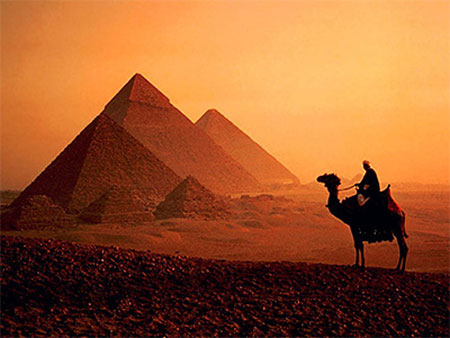
Muslims around the world generally practice identical types of worship in the same way. However Ramadan customs do vary from one country to another and sometimes even from town to village. When it comes to Egyptians, the holy month of Ramadan is the most special occasion of the year. The saying goes, ‘You haven't seen celebrations if you haven't seen Ramadan celebrated in Egypt.'
Know more...
Ramadan began in France by inaugurating two new mosques, one being in Strasbourg where the Muslim population has reached around 15%, and the other in Villeneuve d'Ascq, close to the northern city of Lille. 150 new mosques are currently being built in towns and cities across the country according to the Muslim Council of France.
The Oslo-based Imam Syed Farasat Ali Bukhari in Norway told the Norwegian state television channel (NRK) that any Muslim not fasting during the sacred month of Ramadan shall be beheaded. He passed these comments shortly after asking the government for permission to open a private Islamic school for 200 students in the Ammerud neighbourhood of Oslo. Reports say that the government subsequently declined his request.
An estimated 95 percent of Spain's 1.5 million Muslims are observing Ramadan this year. Hundreds of provincial and municipal governments have passed special instructions to enable the non-Muslims in avoiding the offence of Muslims during Ramadan. Despite this advice, a municipal councilor was attacked by a Muslim mob on August 7 in the Barcelona suburb of Sant Adrià del Besós. He was trying to photograph an illegal mosque in the town.
Interior Minister Claude Guéant ushered in Ramadan in Paris by telling Muslims that they should utilize a disused barracks instead of praying on the streets. Guéant said that praying in the street is not at all acceptable. He insisted that it is contrary to the French state's secular principles and that it must be put to an end.
The Central Council of Muslims in Germany said that professional Islamic football players are not required to fast during Ramadan, ahead of the regular season which resumed again on August 5. According to the council president Aiman Mazyek, the player can make up the fasting days during the days when there is no match. By dong that he can way show his respect for God and the sacred month of Ramadan.
A tussle over this issue began in Germany in October 2009 when FSV Frankfurt, the second-division team warned three Muslim players officially for fasting during Ramadan and not informing their managers. Islamic scholars at the Al-Azhar University in Cairo concluded after much debate that an exception to the strict Ramadan fasting rules could be made for professional players such that their performance is not compromised.
A parliamentary commission on August 2 in Italy approved a draft law which prevented women from covering their faces in public by wearing veils. This draft would prohibit women from traversing in public wearing a niqab, burqa or any other piece of clothing that covered their face. Women violating this ban would be faced with fines. People who forced women to cover their faces in public would also be fined and may even face up to 12 months in jail.
The northern town of Cittadella issued a ban on the sale of "foul-smelling" foreign foods, specifically kebabs. A kebab is a skewered meat dish which is often served wrapped in bread. It originates in the Middle East but has become increasingly popular in Italy in recent years It can be found in various cities across Europe. Angry Muslim immigrants protest that, to ban kebabs in Cittadella identical to forbidding pizza in Paris or New York.
The Social Democrats have called for turning Ramadan into an official Swedish holiday. Almost all of their public holidays, except for May 1st and Midsummer have a Christian religious connection. Today, Sweden is a multicultural societ. Social Democrat Party secretary Carin Jämtin declared to the centrist Svenska Dagbladet daily newspaper that it can surely be incorporated as a holiday.
The estimated 500,000 Muslims, meanwhile, in Sweden are struggling to address a strange problem because this year Ramadan is falling during the long days of summer. For example, in northern Sweden, Umeå, dawn arrived at 3.47am on 1st August and the sun set at 9.41pm. This required almost an 18 hour fast as compared to only 13 hours in Mecca.
Canadians would normally groan and cringe at the idea of doing hard, physical work in the blistering heat of summer. To add to that they are doing it without being able to quench their thirst as they begin to sweat bullets, or without being able to grab a quick snack in order to refresh themselves.
In recent times, hundreds and thousands of Muslim Canadians all over the country have been practicing Ramadan, the ninth month of the lunar Islamic calendar. During this sacred month, Muslims refrain themselves from drink and food and other pleasures in daylight hours to honor the revelation of the Koran to Mohammed.
Ramadan falls in the dead of summer this year. This means extended daylight and thus Muslims are going to have to fast longer than in previous years, almost up to 18 hours at a stretch in some parts of the country. Many people wake up before 4 am to have an early morning breakfast before the sun rises. With prayers going until midnight, the days are much longer.
People with physically demanding jobs, for example those in construction or farming, are faced with some real hindrances. However, regardless of the job, many Muslim Canadians are handling the intersection of religious observance and work.
The Globe and Mail listened to five Muslim Canadians about what it's like to fast on the job, and how they tackle this experience of going from dawn till dusk with no food for 30 whole days.
 Mother's Day
 Buddha Purnima
 Personal Finance Guide
 Multifaceted Blog
 Good Morning
 Dating