Master electronic measuring instruments with our complete guide. Discover precision tools, applications, and expert tips for accurate measurements in any field.
Electronic measuring instruments have become indispensable in modern workplaces. Whether you're troubleshooting electrical systems, monitoring industrial processes, or conducting scientific research, precision measurement tools determine success. This guide walks you through everything you need to know about electronic measuring instruments, their applications, and how to choose the right ones for your work.
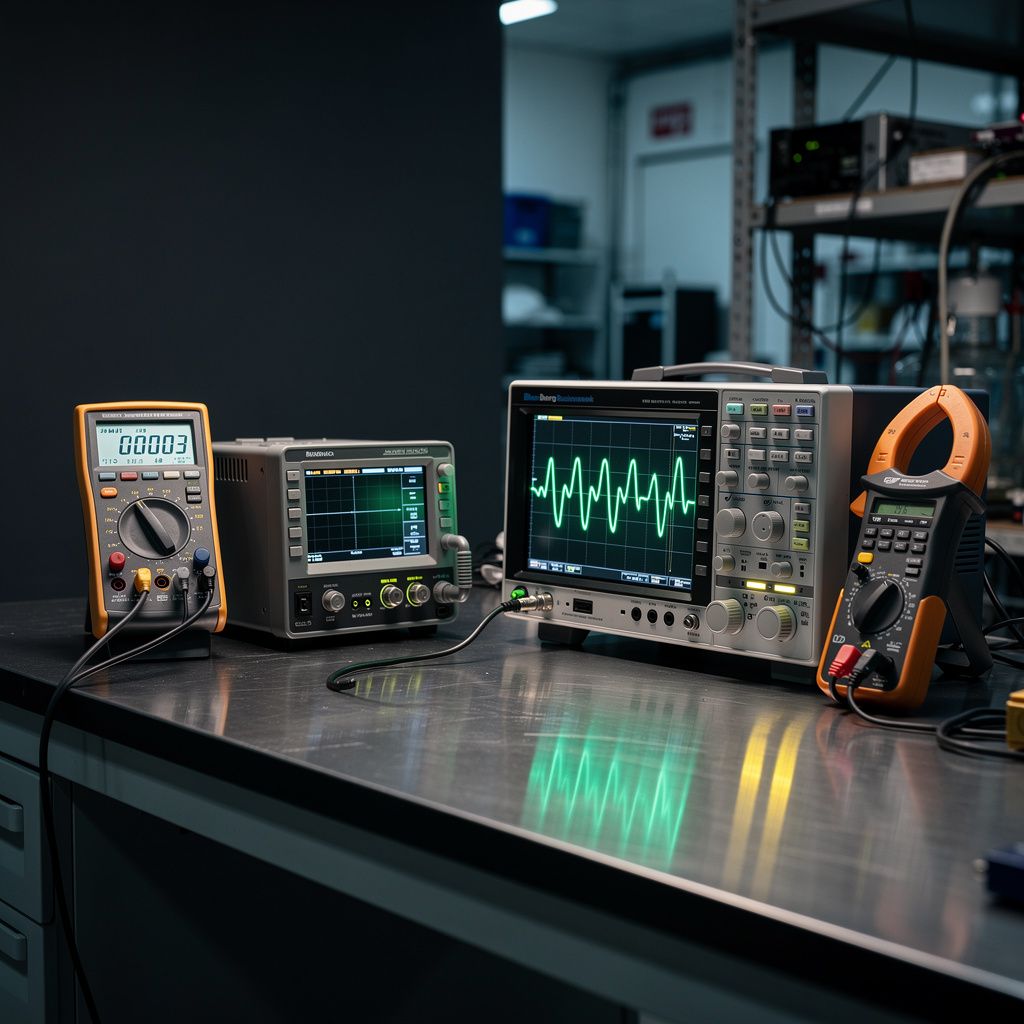
Understanding Electronic Measuring Instruments
Electronic measuring instruments are devices that convert physical quantities into electrical signals, displaying measurable data on digital or analog screens. Unlike traditional mechanical gauges, these instruments offer superior accuracy, faster readings, and often provide data logging capabilities. They've become the backbone of quality assurance, equipment maintenance, and scientific discovery across virtually every industry.
Key Benefits and Limitations
Benefits That Matter
- Precision and Accuracy: Electronic instruments provide measurements accurate to fractions of a unit, far exceeding manual methods.
- Speed: Real-time readings eliminate waiting time and enable quick decision-making.
- Data Logging: Many instruments automatically record measurements for trend analysis and compliance documentation.
- Versatility: Single devices often measure multiple parameters, reducing equipment investment.
- Repeatability: Consistent results across multiple measurements ensure reliability in critical applications.
- Remote Monitoring: Modern instruments connect to networks, enabling remote supervision and alerts.
Understanding the Limitations
- Initial Cost: Quality electronic instruments require significant upfront investment compared to analog alternatives.
- Calibration Requirements: Regular calibration maintains accuracy, adding to operational costs.
- Power Dependency: Battery or electrical supply failures can interrupt measurements.
- Learning Curve: Complex instruments require training for proper operation and data interpretation.
- Environmental Sensitivity: Temperature, humidity, and electromagnetic interference can affect readings.
Essential Types of Electronic Measuring Instruments
Multimeters
Digital multimeters (DMMs) measure voltage, current, and resistance in electrical circuits. They're essential for electricians, technicians, and engineers. Modern multimeters offer features like auto-ranging, continuity testing, and capacitance measurement, making them versatile for troubleshooting and maintenance work.
Oscilloscopes
Oscilloscopes visualize electrical signals over time, displaying waveforms on a screen. They're crucial for electronics engineers and technicians working with AC signals, digital circuits, and complex electronic systems. Advanced models offer digital storage, triggering, and analysis capabilities.
Pressure Transducers
These instruments convert pressure into electrical signals, essential in hydraulic systems, HVAC applications, and industrial process control. They provide continuous monitoring and can trigger alarms when pressure exceeds safe limits.
Temperature Sensors and Thermometers
Electronic temperature measurement devices range from simple digital thermometers to sophisticated thermal imaging cameras. They're vital in healthcare, food safety, HVAC systems, and manufacturing quality control.
Power Quality Analyzers
These instruments measure voltage, current, power factor, and harmonics in electrical systems. They identify power quality issues that can damage equipment or reduce efficiency, making them essential for facility management.
Clamp Meters
Designed for measuring current without breaking circuit connections, clamp meters are indispensable for electricians. They combine multimeter functions with non-invasive current measurement.
Current Trends in Electronic Measurement Technology
The field of electronic measurement continues evolving rapidly. IoT integration enables real-time data transmission to cloud platforms for analysis. Wireless connectivity eliminates cable constraints, improving safety and convenience. AI-powered analysis interprets complex measurement data automatically, reducing human error. Portable instruments with smartphone integration bring professional-grade measurement capabilities to field technicians. Battery technology improvements extend operation time, while improved durability ratings allow use in harsh environments.
Critical Features to Evaluate
Measurement Range and Resolution
Ensure the instrument covers your measurement range with sufficient resolution. An instrument measuring 0-1000V with 1V resolution won't detect small variations in low-voltage circuits.
Accuracy Specifications
Accuracy is typically expressed as a percentage of the reading plus a fixed number of digits. Lower percentages and fewer fixed digits indicate better accuracy. For critical applications, accuracy specifications matter significantly.
Sampling Rate and Bandwidth
For oscilloscopes and data loggers, sampling rate determines how accurately fast-changing signals are captured. Bandwidth specifications indicate the frequency range the instrument can measure reliably.
Display Quality
Clear, bright displays reduce reading errors and fatigue. Consider screen size, resolution, and whether backlighting is necessary for your working environment.
Connectivity Options
USB, Bluetooth, WiFi, and Ethernet connectivity enable data transfer and remote monitoring. Choose instruments that integrate with your existing systems and software.
Comparison: Common Electronic Measuring Instruments
| Instrument Type | Primary Use | Typical Accuracy | Cost Range | Best For |
|---|---|---|---|---|
| Digital Multimeter | Voltage, Current, Resistance | 0.5-2% | $50-$500 | General electrical work |
| Oscilloscope | Signal visualization | 1-3% | $500-$5,000+ | Electronics troubleshooting |
| Pressure Transducer | Pressure monitoring | 0.5-1% | $100-$1,000 | Industrial systems |
| Thermal Camera | Temperature imaging | 2-5% | $300-$3,000 | Building diagnostics |
| Power Analyzer | Power quality assessment | 0.5-2% | $2,000-$10,000 | Facility management |
Leading Manufacturers and Their Specializations
Fluke dominates the portable test equipment market with rugged, reliable multimeters and clamp meters trusted by field technicians worldwide. Tektronix leads oscilloscope innovation with advanced triggering and analysis features. Keysight provides precision instruments for telecommunications and aerospace applications. Yokogawa specializes in industrial process measurement and control. Rohde & Schwarz offers high-end RF and microwave measurement solutions. Hioki produces portable power quality and electrical safety testing instruments. Understanding each manufacturer's strengths helps you select instruments matched to your specific requirements.
Selecting the Right Instrument for Your Needs
Define Your Requirements
Start by identifying what you need to measure, the expected range, required accuracy, and frequency of measurements. Document environmental conditions where measurements occur.
Evaluate Total Cost of Ownership
Consider not just purchase price, but calibration costs, replacement batteries, software licenses, and training expenses. Sometimes a more expensive instrument with lower operating costs proves more economical.
Test Before Purchasing
Whenever possible, test instruments hands-on. Ergonomics, display clarity, and menu navigation significantly impact daily usability.
Consider Future Needs
Select instruments with features you might need soon. Upgrading later often costs more than purchasing capability upfront.
Expert Tips for Maximum Measurement Accuracy
- Calibrate Regularly: Establish a calibration schedule based on manufacturer recommendations and usage intensity. Certified calibration ensures traceability to national standards.
- Understand Measurement Uncertainty: All measurements have inherent uncertainty. Know your instrument's specifications and account for uncertainty in critical decisions.
- Minimize Environmental Effects: Temperature, humidity, and electromagnetic interference affect readings. Measure under stable environmental conditions when possible.
- Use Proper Measurement Techniques: Correct probe placement, connection methods, and settings dramatically impact accuracy. Read instrument manuals thoroughly.
- Maintain Equipment Properly: Clean probes and connectors regularly. Store instruments in appropriate cases. Replace worn cables and batteries promptly.
- Document Measurements: Record measurement conditions, dates, and instrument serial numbers. This documentation proves invaluable for troubleshooting and compliance.
- Invest in Training: Proper training on instrument operation and measurement techniques pays dividends in accuracy and efficiency.
Frequently Asked Questions
What's the difference between analog and digital measuring instruments?
Analog instruments display readings on a needle gauge, while digital instruments show numerical values on electronic displays. Digital instruments generally offer better accuracy, easier reading, and data logging capabilities. Analog instruments provide continuous signal visualization and don't require batteries.
How often should electronic measuring instruments be calibrated?
Calibration frequency depends on usage intensity and accuracy requirements. Most manufacturers recommend annual calibration for instruments in regular use. High-precision applications or instruments in harsh environments may require more frequent calibration. Document all calibration activities for compliance purposes.
Can I use a multimeter to measure AC and DC current simultaneously?
Most multimeters measure either AC or DC current, not both simultaneously. However, advanced models with true RMS capability can measure AC current accurately even with DC components present. Always select the correct measurement mode before testing.
What does "true RMS" mean in multimeters?
True RMS (Root Mean Square) multimeters accurately measure AC current and voltage with non-sinusoidal waveforms, common in modern electronics with variable frequency drives and switching power supplies. Non-RMS meters only work accurately with pure sine waves, making true RMS capability essential for modern electrical work.
How do I prevent damage to sensitive electronic measuring instruments?
Protect instruments from overvoltage by using appropriate measurement ranges and fuses. Avoid dropping or exposing instruments to extreme temperatures. Store in protective cases away from moisture and corrosive environments. Use surge protectors for instruments connected to AC power. Follow manufacturer guidelines for maximum input specifications.
What's the advantage of wireless electronic measuring instruments?
Wireless instruments eliminate cable constraints, improving safety and convenience in field measurements. They enable remote monitoring from safe distances and allow technicians to work more efficiently. Data automatically transmits to computers or smartphones for analysis, reducing transcription errors and improving documentation.
Conclusion
Electronic measuring instruments represent essential investments in precision, efficiency, and reliability across industries. From basic multimeters to sophisticated power analyzers, these tools enable professionals to make accurate decisions based on real data. Understanding instrument types, specifications, and proper usage techniques ensures you get maximum value from your measurement equipment. Whether you're maintaining equipment, troubleshooting problems, or conducting quality assurance, selecting and using the right electronic measuring instruments transforms your ability to deliver superior results. Start by clearly defining your measurement needs, invest in quality instruments appropriate for your applications, commit to proper calibration and maintenance, and continuously develop your measurement skills. The precision and reliability you gain will prove invaluable in your professional work.