Power transformers play an important role in solar power plants by enabling the efficient transfer of electricity from solar photovoltaic (PV) systems to electrical distribution networks and transmission grids. Solar panels generate direct current (DC) electricity, which is converted into alternating current (AC) through inverters. The generated AC electricity may then pass through transformers to reach the voltage level required by the plant's electrical infrastructure and the connected grid. The correct transformer configuration helps maintain reliable power transmission, electrical safety, and operational efficiency.
As renewable energy projects continue to expand, understanding solar power transformer types, transformer functions, and electrical infrastructure has become increasingly important for engineers, project planners, utility operators, and energy professionals. Transformer selection depends on several factors, including solar plant capacity, inverter configuration, grid voltage, operating conditions, and environmental requirements. Understanding these factors provides a useful foundation for evaluating transformer performance in utility-scale solar installations and commercial solar energy systems.
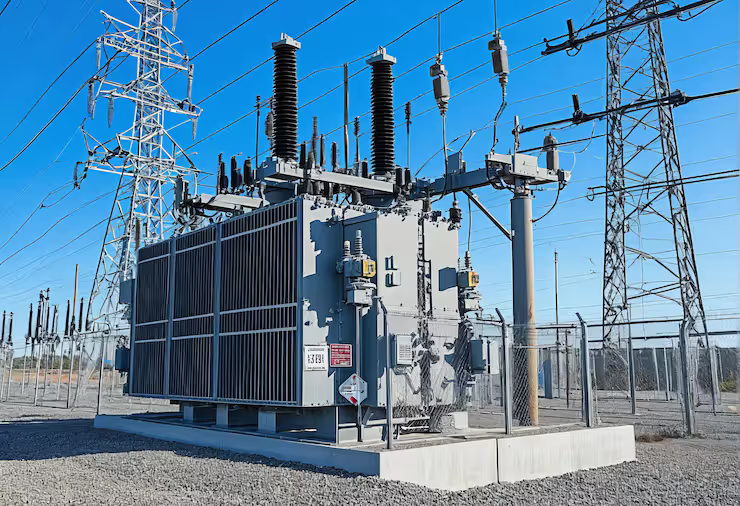
Importance of Power Transformers in Solar Energy Systems
Role in Electricity Transmission
Solar power plants must transfer generated electricity from individual solar arrays and inverter stations to collection systems and electrical grids. Power transformers help achieve the appropriate voltage for different stages of this process. Increasing voltage for transmission can reduce current for a given power level, which generally reduces resistive losses in conductors. This principle is particularly important in large solar installations where electricity may need to travel considerable distances before reaching a substation or grid connection point.
Supporting Renewable Energy Infrastructure
Transformers are essential components of renewable energy infrastructure because they connect power generation equipment with electrical networks. Their performance affects system reliability, voltage regulation, and the overall operation of a solar power facility. A suitable transformer arrangement also helps integrate solar electricity into existing distribution and transmission networks while supporting the technical requirements established by grid operators.
Types of Power Transformers Used in Solar Power Plants
Step-Up Transformers
Step-up transformers increase the voltage of electricity produced by inverter systems to a higher level suitable for collection networks or transmission infrastructure. In utility-scale solar power plants, these transformers commonly connect inverter output circuits to medium-voltage collection systems. At the plant substation, additional step-up transformation may be used when electricity must enter a higher-voltage transmission network.
The voltage ratio, rated power, insulation system, cooling method, and impedance are important characteristics when selecting a step-up transformer. Proper sizing helps accommodate expected generation levels, electrical loading, and operating conditions. Engineers also consider the plant's expansion plans and the technical requirements of the receiving grid.
Distribution Transformers
Distribution transformers are used to change voltage levels within electrical distribution systems. In solar installations, they may support auxiliary electrical loads, connect generation equipment to local distribution networks, or form part of a larger plant's electrical arrangement. Their precise function depends on the system architecture and the voltage levels involved.
Distribution transformers are selected according to load requirements, operating voltage, efficiency, insulation, and installation conditions. In facilities with control rooms, monitoring equipment, ventilation systems, lighting, and other auxiliary loads, separate transformers may be used to supply the required electrical power.
Oil-Immersed Transformers
Oil-immersed transformers use insulating liquid to provide electrical insulation and remove heat from internal components. They are widely used in utility substations and many large power installations because their designs can accommodate substantial electrical ratings and thermal loads.
Transformer oil circulates through the cooling system, transferring heat away from the windings and core. Depending on the design, cooling may use natural oil circulation and natural air cooling or incorporate forced cooling systems. Regular inspection of oil condition, moisture levels, temperature, and protective equipment helps support reliable operation.
Dry-Type Transformers
Dry-type transformers use air or solid insulation systems rather than a tank of insulating oil. They are commonly considered for indoor installations, buildings, control facilities, and locations where fire protection, containment, and maintenance requirements influence equipment selection.
These transformers can be suitable for auxiliary loads and specific solar plant applications. Their suitability depends on rated capacity, ambient temperature, ventilation, enclosure protection, and the installation environment. Dry-type designs should not automatically be considered safer or more efficient in every application; the appropriate choice depends on the project's engineering requirements.
Inverter Duty Transformers
Inverter duty transformers are designed for applications where power electronic inverters supply the transformer. The output waveform and operating characteristics of an inverter can introduce harmonic currents, voltage distortion, and additional thermal stresses that differ from those associated with conventional sinusoidal supplies.
These transformers may incorporate design features that address harmonic loading, insulation stress, and temperature rise. Engineers evaluate inverter specifications, switching characteristics, harmonic performance, and expected loading before selecting a transformer for a solar photovoltaic power plant.
Main Functions of Transformers in Solar Power Plants
Voltage Conversion
The primary function of a power transformer is to increase or decrease AC voltage through electromagnetic induction. Solar power plants use this capability to connect inverter output circuits, collection networks, auxiliary systems, and grid infrastructure operating at different voltage levels.
Voltage conversion must be coordinated with inverter ratings, switchgear, cables, protection systems, and grid connection requirements. Incorrect voltage selection can affect equipment compatibility and plant operation.
Electrical Isolation
Certain transformer configurations provide galvanic isolation between electrical circuits. This isolation can help separate equipment electrically and support system protection and maintenance arrangements. However, not every transformer design provides the same form of isolation, and the need for isolation depends on the inverter topology, applicable electrical standards, and the overall system design.
Improving Transmission Efficiency
Transformers support efficient electricity transmission by enabling higher operating voltages where appropriate. For the same transmitted power, increasing voltage reduces current, which can lower resistive losses in cables and conductors. Actual system efficiency also depends on transformer losses, cable resistance, loading patterns, and the performance of other electrical equipment.
Supporting Grid Integration
Grid-connected solar plants must satisfy requirements relating to voltage, frequency, power quality, protection, and system stability. Transformers form part of the infrastructure that connects solar generation to the grid at the required voltage level. Their impedance and other electrical characteristics influence fault currents, voltage behavior, and system studies.
Transformers alone do not regulate every grid condition. Inverter controls, protection relays, reactive power equipment, and plant-level control systems also contribute to meeting grid connection requirements.
Key Components of a Solar Power Transformer
Magnetic Core and Windings
The transformer core provides a path for magnetic flux, while the primary and secondary windings transfer electrical energy through electromagnetic induction. Core materials, winding arrangement, conductor design, and manufacturing quality influence transformer losses, temperature rise, and electrical performance.
Insulation System
The insulation system separates conductive components and helps prevent electrical breakdown. Depending on the transformer design, insulation may include solid materials, insulating liquid, air gaps, or combinations of these. Moisture, contamination, excessive temperature, and electrical stress can gradually reduce insulation performance.
Cooling System
Transformers generate heat because of winding resistance, core losses, and other operating effects. Cooling systems remove this heat to keep components within their specified temperature limits. Common arrangements include natural air cooling, oil-based cooling, and forced-air or forced-liquid cooling for suitable designs.
Protection and Monitoring Equipment
Transformer protection and monitoring equipment helps identify abnormal operating conditions. Depending on the design and rating, this equipment may include temperature sensors, pressure-relief devices, oil-level indicators, gas detection systems, current transformers, and protective relays.
Monitoring information can help operators identify developing problems before they result in equipment failure. The exact protection arrangement should follow the transformer design, applicable standards, and the plant's protection coordination study.
How Power Transformers Work in a Solar Power Plant
From Solar Panels to the Inverter
Solar photovoltaic modules generate DC electricity when sunlight reaches their semiconductor cells. Multiple modules are connected into strings and arrays to achieve the required electrical output. Inverters convert the DC electricity into AC electricity suitable for the plant's electrical network.
From the Inverter to the Grid
After conversion, the AC output passes through the electrical equipment specified by the plant design. A transformer may raise the inverter output voltage to the medium-voltage collection level. Electricity from multiple inverter stations can then be combined at a collection substation, where another transformer may increase the voltage for transmission or distribution.
The exact arrangement varies according to plant capacity, inverter design, local grid voltage, and the utility's connection requirements. Some installations use integrated inverter-transformer stations, while others use separate transformer and switchgear equipment.
Factors to Consider When Selecting a Solar Power Transformer
Power Rating and Voltage Requirements
Transformer capacity should match the expected electrical loading and the plant's operating profile. Engineers consider inverter output ratings, power factor, ambient conditions, overload requirements, and any planned capacity expansion. Primary and secondary voltage ratings must also match the connected electrical equipment.
Efficiency and Energy Losses
Transformer efficiency affects the amount of generated electricity available for delivery to the grid. Losses typically include no-load losses, which occur when the transformer is energized, and load losses, which vary with current. Evaluating both types of losses across the expected operating profile provides a better understanding of energy performance than comparing rated efficiency alone.
Environmental Conditions
Solar power plants may operate in hot, dusty, humid, coastal, or high-altitude environments. These conditions can affect cooling performance, insulation, corrosion protection, and enclosure requirements. Transformer selection should account for site-specific ambient temperatures, ventilation, contamination, and maintenance access.
Applicable Standards and Grid Requirements
Transformer design and testing should follow relevant standards and project specifications. Depending on the application, engineers may reference applicable IEC or IEEE standards, utility interconnection requirements, and local electrical regulations. Compliance should be verified against the standards and editions applicable to the specific project.
Maintenance of Power Transformers in Solar Power Plants
Routine Inspection
Regular inspection helps identify oil leakage, unusual noise, excessive temperature, damaged connections, corrosion, and other visible abnormalities. Maintenance schedules should follow manufacturer recommendations, operating conditions, and the plant's maintenance procedures.
Oil and Insulation Testing
For oil-immersed transformers, testing may evaluate insulating liquid quality, moisture, dielectric strength, and dissolved gases. These tests can provide information about insulation condition and possible internal faults. Dry-type transformers require different inspection and testing procedures appropriate to their insulation system.
Temperature and Load Monitoring
Monitoring load current, winding temperature, oil temperature, and other relevant operating values helps operators evaluate thermal stress. Trends can reveal persistent overloading, cooling problems, or abnormal operating conditions. Monitoring thresholds should be based on manufacturer specifications and the plant's operating procedures.
Preventive Maintenance Planning
A structured preventive maintenance program combines inspections, electrical testing, protection checks, recordkeeping, and corrective actions. Maintenance intervals depend on transformer type, age, operating conditions, and the consequences of an unexpected outage. Qualified personnel should perform work according to electrical safety procedures.
Applications of Power Transformers in Solar Energy Projects
Utility-Scale Solar Power Plants
Large solar power plants use transformers to collect electricity from inverter stations and connect generation facilities to high-voltage transmission or distribution networks. Transformer capacity, reliability, and loss performance are important considerations because equipment problems can affect substantial amounts of generation.
Commercial and Industrial Solar Installations
Factories, warehouses, office complexes, and other commercial facilities may use solar transformers to connect photovoltaic generation to internal electrical distribution systems. The transformer arrangement depends on whether the installation supplies on-site loads, exports surplus electricity, or operates under a combination of these conditions.
Solar Energy Storage Systems
Solar plants equipped with battery energy storage systems may use transformers to connect power conversion equipment to collection networks or the grid. Depending on the system design, transformers may serve solar generation, battery conversion equipment, auxiliary loads, or shared electrical infrastructure. Bidirectional power flow, harmonics, and operating modes should be considered during engineering and equipment selection.
Hybrid Renewable Energy Systems
Hybrid energy projects combine solar power with other generation technologies or energy storage. Transformers help connect these sources to shared electrical networks at compatible voltage levels. System design must account for the combined generation profile, fault levels, control strategy, and grid interconnection requirements.
Common Challenges in Solar Power Transformer Operation
Thermal Stress and Overloading
High ambient temperatures, inadequate cooling, and excessive electrical loading can increase transformer temperature. Prolonged thermal stress may accelerate insulation aging and reduce equipment service life. Appropriate sizing, ventilation, cooling maintenance, and load monitoring help manage these risks.
Harmonics and Power Quality
Power electronic inverters can introduce harmonic components into electrical systems. Depending on the waveform and operating conditions, these harmonics may increase transformer losses and heating. Engineers assess harmonic levels and transformer suitability as part of the plant's power quality study.
Environmental Exposure
Dust, moisture, salt, and other contaminants can affect external surfaces, cooling equipment, and insulation systems. Appropriate enclosures, corrosion protection, cleaning procedures, and site-specific maintenance help reduce environmental risks.
Unexpected Equipment Outages
Internal insulation problems, cooling failures, electrical faults, and component deterioration can lead to unplanned outages. Preventive testing, condition monitoring, appropriate protection settings, and a documented maintenance plan help improve operational reliability.
Future Developments in Solar Power Transformer Technology
Digital Monitoring and Predictive Maintenance
Digital sensors and monitoring platforms can provide information about temperature, loading, insulation condition, and other operating parameters. When combined with reliable data analysis and maintenance procedures, these systems can help identify developing faults and improve maintenance planning.
Energy-Efficient Transformer Designs
Transformer manufacturers continue to develop designs that reduce core and winding losses. Improved magnetic materials, optimized conductor arrangements, and better cooling designs can support more efficient operation. The practical benefits depend on the transformer's loading profile, design, and operating environment.
Integration with Smart Grids
Smart grid systems use communication, automation, monitoring, and control technologies to coordinate electricity generation and distribution. Transformers remain a core part of the electrical infrastructure connecting solar power plants to these networks. Their integration with monitoring and protection systems can improve visibility into operating conditions and support more effective grid management.
Frequently Asked Questions About Solar Power Transformers
What Is the Main Purpose of a Power Transformer in a Solar Power Plant?
The main purpose is to convert AC electricity to the voltage level required by the plant's collection network, auxiliary distribution system, or connected electrical grid. The transformer arrangement depends on the system design.
Which Type of Transformer Is Used in Solar Power Plants?
Solar power plants may use step-up transformers, distribution transformers, oil-immersed transformers, dry-type transformers, and inverter duty transformers. The selection depends on electrical capacity, voltage requirements, installation conditions, and inverter characteristics.
Why Are Step-Up Transformers Important in Solar Plants?
Step-up transformers increase AC voltage for collection or transmission. Higher voltage can reduce current and resistive losses for a given power transfer, supporting efficient electricity delivery across the plant's electrical infrastructure.
How Does Transformer Efficiency Affect Solar Power Generation?
Transformer losses reduce the electricity available for delivery to the grid or facility. Efficient transformer design and appropriate loading help minimize these losses and improve overall plant energy performance.
How Often Should Solar Power Transformers Be Maintained?
Maintenance frequency depends on the transformer design, operating environment, age, loading, and manufacturer recommendations. Regular inspections and condition-based testing help identify problems and establish appropriate maintenance intervals.
Conclusion
Power transformers are fundamental components of solar power plants because they enable voltage conversion, support electrical distribution, and connect renewable energy generation to the grid. Different transformer types serve different purposes, from raising inverter output voltage to supplying auxiliary loads and connecting energy storage equipment.
Selecting a suitable transformer requires consideration of rated capacity, voltage levels, efficiency, cooling, insulation, environmental conditions, and grid requirements. Regular inspection, condition monitoring, and preventive maintenance help support safe and reliable operation. As solar generation expands and electrical networks become more integrated, efficient and appropriately engineered transformer systems will continue to play an important role in renewable energy infrastructure.