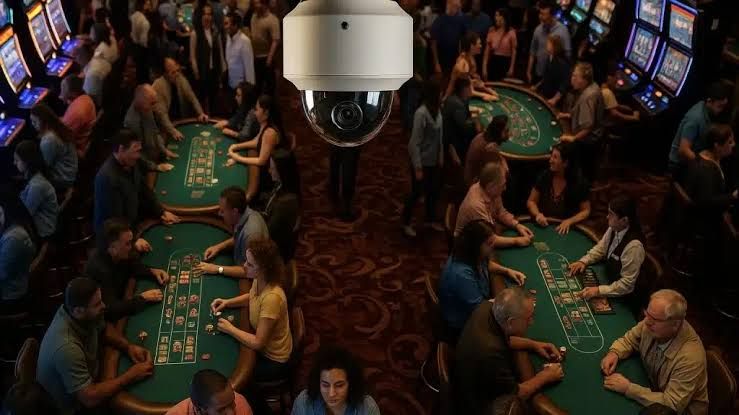
You likely noticed hundreds of dark glass domes. These cameras are the foundation of casino security. If you have ever wondered what those lenses are actually capturing, you are about to get a fascinating look behind the scenes of modern surveillance technology.
The Hardware: High-Definition Precision
Casinos do not use standard home security cameras. They rely on high-definition Pan-Tilt-Zoom (PTZ) cameras. These advanced devices allow security operators to manipulate the lens remotely. The optical zoom capabilities are so powerful that an operator can zoom in close enough to read the serial number on a hundred-dollar bill or see the exact suit of a playing card from all the way across the gaming floor. Major properties on the Las Vegas Strip might have upwards of 3,000 individual cameras actively recording 24 hours a day.
Facial Recognition and Identity Tracking
The moment you walk through the main doors, the cameras are already working to identify you. Many modern casinos utilize advanced facial recognition software integrated directly into their camera networks. This technology scans faces in real-time and cross-references them with massive databases of known cheaters, banned individuals, and VIP high rollers.
Casinos also employ software systems like NORA (Non-Obvious Relationship Awareness). This system can instantly alert security if a blackjack dealer and a player sitting at their table have previously shared a known residential address, effectively preventing potential collusion before it even begins.
Monitoring the Table Games
Table games are heavily monitored because they represent the highest risk for cheating. Surveillance teams are specifically trained to look for subtle, illicit behaviors. They watch for players “capping” bets, which involves secretly adding chips to a winning hand, or “pinching” bets, which means removing chips after a losing hand.
Furthermore, many casinos now use Radio Frequency Identification (RFID) technology embedded directly inside their high-value casino chips. The cameras work in conjunction with RFID readers built into the tables. This allows the casino surveillance team to track exactly how much money is on the table, monitor average bet sizes, and instantly spot any counterfeit chips introduced into the game.
Data Analytics and Card Counting
Surveillance is not just about watching video feeds; it is about analyzing data. When a player sits at a blackjack table, the cameras monitor their betting patterns closely. Security teams look for a “bet spread,” which is a significant variation in wager size. If a player bets ten dollars for five hands and suddenly increases their bet to five hundred dollars without a clear reason, this can be an indicator of card counting. The high-definition cameras allow the surveillance room to review the footage, count the deck down themselves, and determine if the player is legally playing with a mathematical advantage.
Tracking the Slot Floor
Slot machines make up the vast majority of a casino’s revenue, and they are watched just as closely as the card tables. Cameras monitor the slot floor to prevent physical tampering with the gaming cabinets. In the past, scammers used physical tools like a “light wand” to blind the optical sensors inside the coin hoppers. Today, cameras watch for any suspicious physical interaction with the bill validators or the machine’s outer casing. Additionally, the cameras closely monitor the voucher redemption kiosks to ensure payouts are processed correctly and to deter theft.
The Nerve Center: The Surveillance Room
All these camera feeds route to a highly secure, restricted-access surveillance room. This area often resembles a NASA mission control center, featuring walls entirely covered in massive video monitors. The operators working in these rooms are highly trained specialists. Some operators focus entirely on table games, while others strictly monitor the slot machines or the cash handling at the main cages. They communicate constantly via radio with plainclothes security guards on the floor to intercept issues quickly.
Liability and Guest Safety
While catching scammers is a top priority, the cameras serve other vital operational purposes. They protect the casino from expensive liability claims. If a guest claims they slipped and fell on a wet floor, the surveillance team can pull the exact footage to verify the incident and ensure safety protocols were followed. The cameras also monitor employees to prevent internal theft at the cash registers and ensure the overall physical safety of all guests on the property.
Frequently Asked Questions
Are There Cameras in the Hotel Rooms or Bathrooms?
No. Privacy laws strictly prohibit the installation of cameras in areas where guests have a reasonable expectation of privacy, such as restrooms, hotel rooms, and changing areas.
Do Casino Cameras Record Audio?
Generally, the surveillance cameras positioned over the main gaming floor only record video. However, audio recording is frequently used at the cashier cages and customer service desks to help resolve disputes over payouts or transactions.
How Long Do Casinos Keep Their Security Footage?
Retention policies vary by jurisdiction and local gaming regulations. However, most major casinos are required to keep all general surveillance footage for a minimum of 7 to 14 days. Footage involving a specific incident, crime, or dispute is archived and kept indefinitely.